
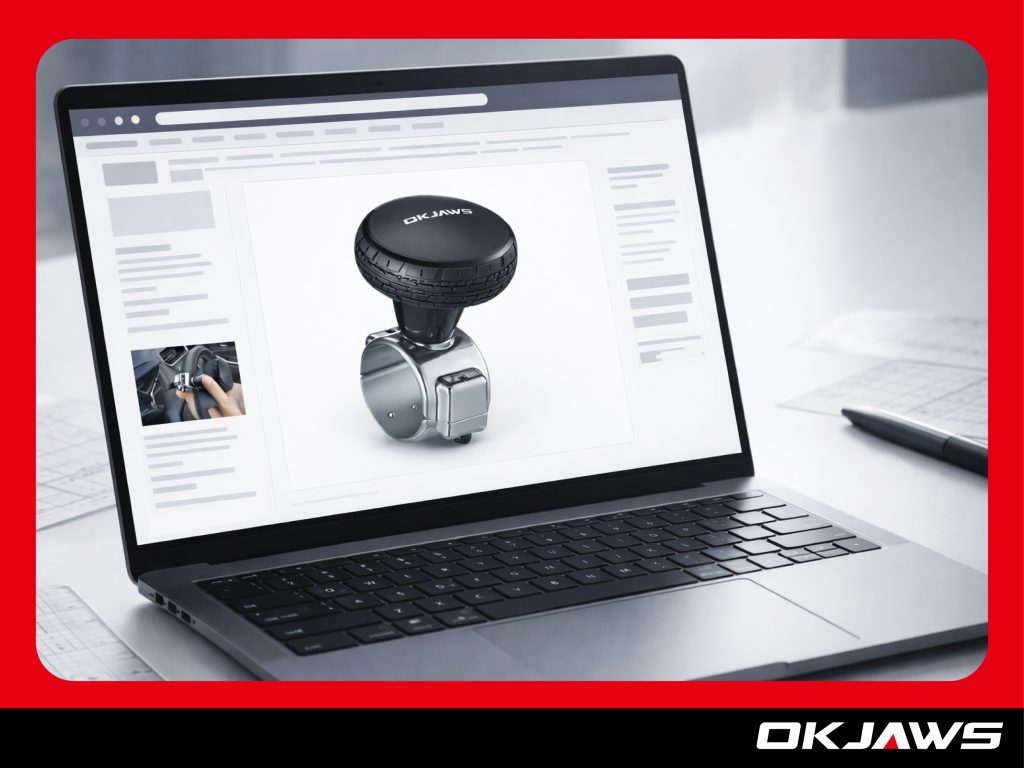
Abstract:
- Conversion rate is the most critical success metric on Amazon, directly influencing organic ranking, PPC efficiency, Buy Box eligibility, and long-term sales performance.
- Traffic alone does not generate revenue; poorly optimized product detail pages fail to convert due to lack of clarity, confidence, and trust—not pricing issues.
- Steering knobs are a high-risk, high-comparison automotive accessory, making conversion optimization especially important due to buyer concerns around safety, compatibility, legality, and durability.
- Visual and structural optimization is the foundation of conversion. High-quality, well-sequenced images and a scannable layout reduce uncertainty and guide shoppers from awareness to purchase.
- Images drive conversion more than any other element, particularly when they clearly communicate real-world usage, installation simplicity, compatibility, and product quality.
- Conversion-focused copy outperforms feature-driven copy by directly addressing buyer objections and translating product features into tangible benefits such as comfort, control, and long-term reliability.
- Optimized titles and bullet points improve both clicks and conversions when they balance readability, keyword relevance, and buyer-centric messaging without keyword stuffing.
- Product descriptions and A+ Content strengthen credibility by enabling storytelling, visual explanation, and FAQ-style objection handling that aligns with shopper search behavior.
- Trust is the final conversion trigger on Amazon, especially when price parity exists across competing listings.
- Reviews and Q&A function as powerful trust signals, providing social proof, transparency, and preemptive objection handling that reduces purchase hesitation.
- Clear safety, compliance, and quality messaging builds confidence when presented factually and without exaggerated claims or legal risk.
- Strong brand presence and seller credibility reduce friction and returns, helping shoppers feel secure about purchasing and setting accurate expectations.
- A systematic listing optimization checklist ensures consistent performance, covering images, copy, keywords, trust elements, mobile usability, and review management.
- Sustainable Amazon growth comes from conversion optimization, not short-term pricing tactics or increased ad spend.
Introduction: Why Conversion Rate Matters on Amazon Product Detail Pages
On Amazon, traffic alone does not generate sales. What truly determines success is conversion rate—the percentage of shoppers who land on your product detail page and actually complete a purchase. In the Amazon ecosystem, conversion rate is more than just a performance metric. Instead, it is a core signal that influences visibility, advertising efficiency, and long-term sales momentum. Therefore, understanding and optimizing conversion rate is essential for any seller serious about growth.
From a platform perspective, Amazon is designed to reward listings that convert well. When a product detail page achieves a higher conversion rate, Amazon’s algorithm interprets it as a better match for shopper intent. As a result, that listing is more likely to rank higher organically. At the same time, conversion rate directly affects PPC efficiency. Even though two sellers may bid the same amount, the listing with stronger conversion typically wins better placements at a lower effective cost. Moreover, conversion performance also plays a role in Buy Box eligibility, because Amazon prioritizes sellers who deliver consistent sales and customer satisfaction.
This dynamic becomes even more critical in the automotive accessories category. Steering knobs, in particular, are a high-risk and high-comparison product. Shoppers often worry about safety, compatibility, legality, and long-term durability. Because of these concerns, buyers tend to compare multiple listings side by side before making a decision. If your product detail page fails to clearly answer these questions, shoppers will hesitate—or worse, leave.
From a retail and e-commerce consultant’s perspective, this is where many sellers misunderstand the problem. Most underperforming Amazon listings do not fail because of price. Instead, they fail because the product detail page does not build enough confidence to convert traffic into buyers. Poor images, unclear messaging, and missing trust signals quietly destroy conversion rate.
For this reason, improving conversion requires a structured approach. In this article, we will break down three proven ways to optimize steering knob listings using practical Amazon listing tips that directly improve conversion rate and strengthen overall product detail page performance.
Section Summary
This introduction explains why conversion rate is a critical success factor on Amazon, especially for steering knob product detail pages, and establishes the strategic importance of optimizing listings through three focused, conversion-driven methods.
Way #1: Optimize the Visual & Structural Foundation of Your Product Detail Page
A strong conversion rate on Amazon almost always starts with visuals and structure. Before shoppers read a single bullet point, they scan images, titles, and layout cues to decide whether a product detail page feels trustworthy. Therefore, optimizing the visual and structural foundation of your listing is the fastest way to improve performance, especially for steering knobs, where buyers perceive higher risk.
Why Images Have the Biggest Impact on Conversion Rate
Amazon is a visual-first marketplace. Shoppers scroll quickly, compare multiple listings, and make snap judgments within seconds. Because of this behavior, images often influence conversion rate more than price or even reviews, particularly in competitive categories like automotive accessories.
Steering knobs require visual reassurance in several critical areas. First, buyers want to feel confident about safety. If the product looks unstable, poorly built, or loosely attached in photos, hesitation immediately follows. Second, compatibility is a major concern. Shoppers need to know whether the knob fits their steering wheel size, vehicle type, or driving needs. Third, installation clarity matters. If installation looks complicated or unclear, buyers may abandon the listing entirely. Finally, real-world usage images help shoppers visualize themselves using the product, which psychologically increases purchase intent.
From a retail and e-commerce consultant’s standpoint, image quantity and quality directly correlate with conversion lift. Listings that use the full image allowance—while maintaining clarity and relevance—consistently outperform those with only a few basic photos. Although adding more images alone does not guarantee success, well-planned visuals reduce uncertainty, shorten decision time, and improve overall conversion rate.
Essential Image Types for Steering Knob Listings
To build a high-performing product detail page, image variety is just as important as image quality. Each image should answer a specific buyer question rather than repeat the same angle.
The main image is the most critical. It must be policy-compliant, set against a clean white background, and optimized for zoom. At the same time, it should be visually striking enough to stand out in search results. A well-lit, high-resolution main image increases click-through rate, which indirectly supports conversion.
Next, lifestyle images show the steering knob in real driving scenarios. These images help shoppers understand scale, ergonomics, and comfort. More importantly, they communicate emotional benefits, such as smoother control or reduced strain during driving. Because lifestyle images feel more human, they often bridge the gap between interest and trust.
Installation step visuals are equally important. Even a simple installation process can feel intimidating if not clearly shown. Step-by-step images reassure shoppers that no special tools or expertise are required, which lowers psychological resistance.
Compatibility charts further reduce friction. By visually explaining steering wheel sizes, vehicle types, or use cases, these charts answer one of the most common pre-purchase questions without forcing shoppers to read long text blocks.
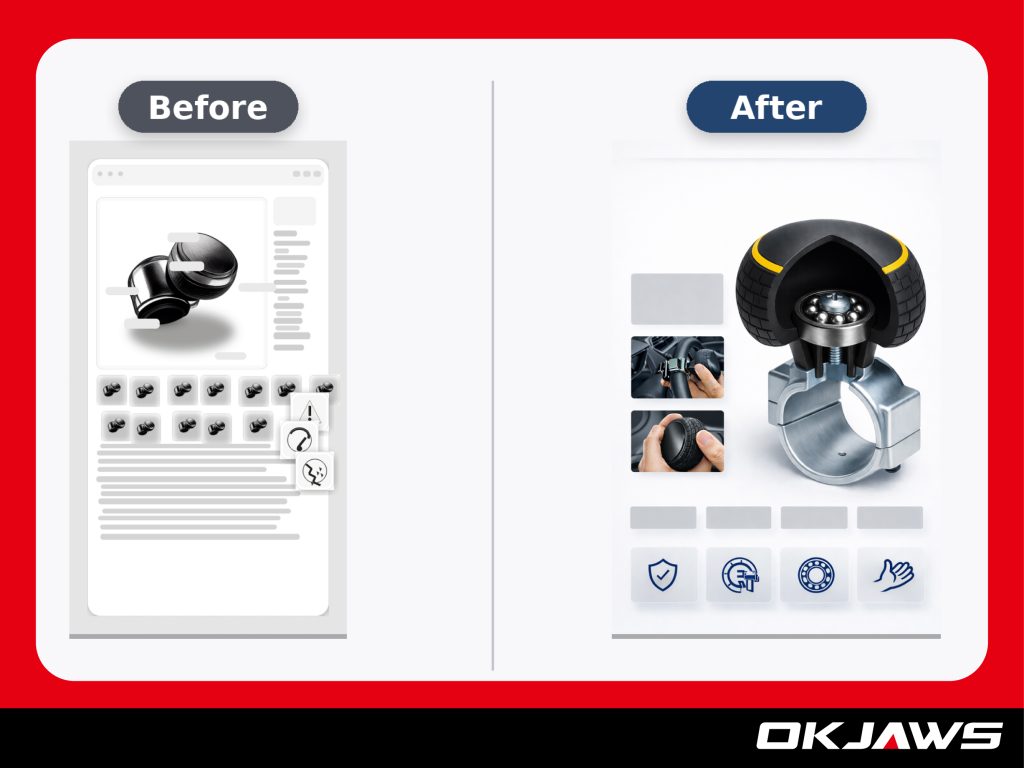
Finally, infographics highlighting materials and structure add credibility. Visual callouts showing bearings, materials, or internal design elements help justify value and position the product as durable and well-engineered.
How to Sequence Images to Guide Buying Decisions
Image order is not random. A logical sequence helps guide shoppers through a decision-making journey, which directly improves conversion rate.
The first few images should focus on awareness. These include the main image and a clean lifestyle shot that quickly communicates what the product is and how it is used. Next comes reassurance, where images address safety, compatibility, and installation. This stage is critical for steering knobs, because unresolved doubts often lead to abandonment. Finally, the last images should support the decision stage, using infographics or comparison-style visuals to reinforce value and quality.
Mobile-first readability is essential throughout this sequence. Since a large portion of Amazon traffic comes from mobile devices, images must remain clear on small screens. Text overlays should be minimal, high-contrast, and easy to read without zooming. At the same time, sellers must avoid policy violations by keeping claims factual and non-promotional.
When done correctly, image sequencing functions like silent sales copy. It answers questions before shoppers consciously ask them, which shortens the buying cycle.
Structuring the Product Detail Page for Scannability
While images capture attention, structure sustains it. A poorly structured product detail page can undermine even the best visuals. Therefore, clarity and scannability are essential Amazon listing tips for improving conversion rate.
The title should balance clarity with keyword relevance. It must clearly describe the product while naturally incorporating core terms related to steering knobs. Overloading the title with keywords may hurt readability and trust, even if it appears SEO-friendly.
Next, bullet points should follow a clear hierarchy. Instead of listing random features, bullets should move from features to benefits and then to outcomes. For example, material quality should be linked to durability, which then connects to long-term reliability. This logical flow helps shoppers quickly understand why the product matters to them.
Finally, strategic keyword placement throughout the product detail page supports both discoverability and conversion. Keywords such as “Amazon listing tips,” “conversion rate,” and “product detail page” should appear naturally where relevant, without disrupting the reading experience. Keyword stuffing, on the other hand, creates friction and damages credibility.
When visuals and structure work together, the product detail page becomes easier to scan, easier to trust, and easier to buy from.
Section Summary
This section demonstrates how a well-structured product detail page—anchored by high-quality images, logical image sequencing, and clear layout—reduces buyer uncertainty and significantly improves conversion rate for steering knob listings by guiding shoppers smoothly from interest to purchase.
Way #2: Use Conversion-Focused Copy That Answers Buyer Objections
While strong visuals attract attention, it is copywriting that resolves doubt and pushes shoppers toward a buying decision. On Amazon, especially for automotive accessories, buyers often arrive skeptical. Therefore, conversion-focused copy must do more than describe the product—it must actively remove hesitation. For steering knobs, this means anticipating concerns and answering them clearly throughout the product detail page.
Feature-Driven Copy vs. Conversion-Driven Copy
Many Amazon listings rely heavily on feature-driven copy. They list materials, dimensions, and components, assuming shoppers will connect the dots themselves. However, features alone rarely sell. Shoppers do not buy a steering knob because it uses a specific alloy or bearing. Instead, they buy it because it promises smoother control, safer handling, or reduced fatigue.
Conversion-driven copy takes this distinction seriously. Rather than simply stating what the product is, it explains why the product matters. This approach is especially important because steering knob buyers tend to arrive with specific objections already in mind.
One of the most common concerns is safety. Shoppers want to know whether the knob will remain stable during sharp turns or emergency maneuvers. Another frequent question is legality. In some regions, steering accessories raise regulatory concerns, so buyers look for reassurance that the product is designed responsibly. Compatibility is also critical. Buyers worry about whether the knob will fit their steering wheel and work with their driving style. Finally, durability plays a major role. Shoppers want confidence that the product will last and not loosen or degrade over time.
Effective conversion-focused copy addresses these objections proactively. By doing so, it reduces mental friction and keeps shoppers engaged instead of sending them back to search results.
Optimizing the Amazon Title for Clicks and Conversions
The Amazon title is often the first piece of copy a shopper reads. Therefore, it must balance discoverability with clarity. A well-optimized title attracts clicks, but more importantly, it sets accurate expectations that support conversion rate once shoppers land on the product detail page.
For automotive accessories, a strong title typically follows a clear formula: product type first, followed by key compatibility or benefit indicators, and then supporting descriptors. This structure helps shoppers quickly understand what the product is and whether it applies to their needs. At the same time, it allows sellers to incorporate relevant keywords naturally.
Balancing readability with Amazon listing tips is essential. While it may be tempting to include every possible keyword variation, overly long or awkward titles can reduce trust. Shoppers may perceive keyword-stuffed titles as unprofessional or low-quality, which negatively affects conversion rate.
Avoiding keyword cannibalization is another important consideration. Repeating the same keywords excessively in the title, bullets, and backend fields does not improve performance. Instead, it often dilutes clarity. A clean, readable title that aligns with the rest of the product detail page creates a smoother buying experience and supports both ranking and conversion.
Writing Bullet Points That Increase Conversion Rate
Bullet points are the most heavily read section of a product detail page. Most shoppers skim them quickly to decide whether to continue reading or move on. For this reason, bullet points should be structured for persuasion, not just information.
A benefit-first bullet structure works best. Each bullet should start with a clear benefit, followed by the feature that enables it. This approach immediately answers the shopper’s implicit question: “What’s in it for me?” For example, instead of listing material specifications alone, the bullet can explain how those materials contribute to stability or longevity.
Turning materials into real-world outcomes is especially effective for steering knobs. High-quality components should be tied to tangible benefits such as smoother steering response, reduced hand strain, or consistent performance over time. When shoppers can easily imagine these outcomes, confidence increases.
Positioning around comfort, control, and accessibility also plays a major role. Many steering knob buyers are looking for easier maneuvering, improved ergonomics, or support during long drives. Copy that clearly communicates these advantages resonates more strongly than generic feature lists.
Finally, using trust-oriented language reinforces credibility. Clear, factual wording that avoids exaggerated claims helps shoppers feel secure in their decision. Subtle cues—such as emphasizing consistent performance or careful design—build reassurance without appearing promotional.
Optimizing Product Descriptions and A+ Content
Beyond titles and bullets, the product description and A+ Content offer additional opportunities to strengthen conversion rate. However, each format serves a different purpose.
The standard product description is ideal for expanding on details in a structured, text-based format. It works best when organized into short paragraphs with clear headings, making it easy to skim. This section can reinforce key benefits while providing extra context for buyers who want more information.
A+ Content, on the other hand, is particularly effective for storytelling and visual explanation. When available, it allows sellers to combine images and text to communicate brand credibility, usage scenarios, and design philosophy. This format is well-suited for steering knobs because it can visually explain safety, ergonomics, and build quality in a more engaging way.
Regardless of format, storytelling for credibility matters. Explaining why the product was designed a certain way, or how it improves everyday driving, creates an emotional connection that supports conversion. At the same time, formatting should always support skimming behavior. Short sections, clear headings, and visual breaks prevent information overload.
Including FAQ-style sections is another powerful technique. These sections align well with People Also Ask queries and directly address lingering doubts. By answering common questions within the product detail page, sellers reduce the need for shoppers to look elsewhere for reassurance.
Section Summary
This section explains how conversion-focused copywriting transforms a steering knob product detail page into a persuasive sales tool by addressing buyer objections, improving clarity, and reducing hesitation through optimized titles, benefit-driven bullet points, and strategic use of product descriptions and A+ Content.
Way #3: Build Trust Signals That Remove Purchase Friction
Even when a product detail page looks professional and the copy is persuasive, many Amazon shoppers still hesitate at the final step. At this stage, trust becomes the deciding factor. For steering knob listings, where safety and compatibility concerns are common, trust signals often determine whether a shopper clicks “Add to Cart” or leaves the page. Therefore, building and communicating trust is essential for improving conversion rate.
Why Trust Is the Final Conversion Trigger on Amazon
In many Amazon categories, price differences between competing products are minimal. When price parity exists, competition naturally shifts from cost to confidence. Shoppers ask themselves which product feels safer, more reliable, and less risky. This is especially true for automotive accessories, where poor product quality can affect driving experience or safety.
Steering knobs require a higher level of buyer confidence because they directly interact with vehicle control. As a result, shoppers are more cautious and more likely to look for reassurance before purchasing. From a retail and e-commerce consultant’s perspective, this behavior explains why trust-focused listings often outperform cheaper alternatives.
Trust also plays a critical role in return-rate reduction. When buyers fully understand what they are purchasing and feel confident in the product’s quality, they are less likely to return it. Lower return rates not only protect profit margins but also send positive performance signals to Amazon’s algorithm, which can indirectly support conversion rate and visibility.
In short, trust is not just a branding concept. It is a measurable conversion driver that influences sales performance long after the initial click.
Using Reviews and Q&A to Improve Conversion Rate
Customer reviews are among the most powerful trust signals on a product detail page. Before making a purchase, many shoppers scroll directly to the review section to validate their decision. Even when reviews are not perfect, authenticity and volume often matter more than flawless ratings.
Reviews influence buyer decisions by providing social proof. When shoppers see that others have purchased and used the steering knob successfully, uncertainty decreases. Moreover, detailed reviews that mention installation, compatibility, or long-term use help address common objections without requiring additional copy from the seller.
However, increasing review volume must be done ethically. Practices such as follow-up emails through Amazon’s approved messaging system, clear packaging instructions, and consistent product quality naturally encourage satisfied customers to leave feedback. These methods build trust without risking account health.
The Q&A section is another underutilized trust-building tool. Many shoppers read questions and answers before purchasing, especially for technical products. By monitoring this section and responding clearly, sellers can preempt objections related to fit, safety, or usage. Each answered question becomes a public reassurance point that supports conversion rate for future shoppers.
When reviews and Q&A work together, they create a layer of transparency that reduces friction and builds confidence.
Communicating Safety, Compliance, and Quality
For steering knob listings, safety and compliance messaging must be handled carefully. While shoppers want reassurance, exaggerated or legally risky claims can harm credibility. Therefore, the goal is to communicate responsibility and quality without making unverifiable promises.
Discussing safety should focus on design intent and usage guidance rather than absolute guarantees. Clear explanations of how the product is designed to remain stable or how it should be installed correctly help shoppers feel informed and empowered.
Manufacturing quality signals further reinforce trust. Information about materials, production standards, or quality control processes communicates professionalism. Even simple details—such as precision components or durable finishes—can elevate perceived value when presented clearly.
Country-of-origin and material transparency also play a role in conversion rate. Many shoppers associate certain regions or materials with higher reliability. Transparently stating where the product is made and what materials are used removes ambiguity and positions the listing as honest and confident.
When safety, compliance, and quality are communicated factually and clearly, they support trust without introducing legal or reputational risk.
Brand Presence and Seller Credibility
Beyond individual product elements, overall brand presence significantly impacts conversion. Shoppers are more likely to trust sellers who appear consistent, professional, and established.
Brand consistency across images, copy tone, and messaging creates a cohesive experience. When the product detail page feels aligned rather than fragmented, shoppers perceive the brand as more reliable. This perception reduces hesitation, even for first-time buyers.
The “About Us” section is often overlooked, yet it offers valuable reassurance. A clear explanation of the brand’s focus, experience, or commitment to quality helps humanize the listing. Shoppers may not spend long here, but the presence of thoughtful brand information signals legitimacy.
Brand clarity also contributes to lower return rates. When buyers understand who the seller is and what the brand stands for, expectations are set more accurately. Accurate expectations reduce disappointment, which in turn supports long-term conversion performance.
Ultimately, brand credibility acts as a silent guarantee. It reassures shoppers that the seller stands behind the product, which makes the final purchase decision easier.
Section Summary
This section outlines how trust signals—such as authentic reviews, responsive Q&A, responsible safety messaging, and consistent brand credibility—work together to remove purchase friction and increase conversion rate on Amazon by reassuring shoppers and reducing perceived risk.

Final Checklist: Steering Knob Amazon Listing Optimization for Higher Conversion
Before driving more traffic to your listing, it is critical to confirm that your product detail page is fully optimized for conversion. Even small gaps in presentation or messaging can quietly reduce performance. Therefore, this checklist is designed as a final quality-control step to ensure your steering knob listing meets Amazon best practices and buyer expectations.
Conversion Optimization Checklist
- Image Count and Image Types
Ensure you are using the full image allowance whenever possible. Include a clear main image, lifestyle usage photos, installation steps, compatibility charts, and infographics that explain materials or structure. Together, these visuals should eliminate doubts around safety, fit, and ease of use. - Title and Bullet Optimization
Confirm that the title is readable, accurate, and keyword-aligned without feeling stuffed. Bullet points should follow a benefit-first structure, clearly linking features to real-world outcomes such as improved control, comfort, or durability. - Keyword Placement
Review keyword usage across the product detail page. Core terms should appear naturally in the title, bullets, and description. Avoid repeating the same phrases excessively, as clarity supports conversion rate more than keyword density alone. - Trust Elements
Check that reviews, Q&A, and quality cues are visible and actively managed. Address unanswered questions and ensure your copy communicates reliability without exaggerated claims. - Mobile Optimization
View the listing on mobile. Images should remain clear, text should be scannable, and important information should appear early without requiring excessive scrolling. - Review and Q&A Management
Monitor reviews regularly and respond where appropriate. Encourage honest feedback through compliant follow-up methods, and use the Q&A section to proactively clarify common concerns.
By systematically reviewing this checklist, sellers can identify weak points that limit conversion rate and make targeted improvements that strengthen overall product detail page performance.
Conclusion: Turning Traffic into Sales with the Right Amazon Listing Strategy
Driving traffic to an Amazon product detail page is only half the battle. The real growth opportunity lies in turning that traffic into consistent sales. For steering knob listings, where buyers are cautious and comparison-driven, conversion rate becomes the most scalable lever for long-term success. Improving it does not require endless ad spend. Instead, it requires a thoughtful, buyer-focused listing strategy.
Throughout this article, we covered three practical ways to improve performance. First, optimizing the visual and structural foundation ensures shoppers immediately understand the product, feel reassured about safety and compatibility, and can scan the page with ease. Second, using conversion-focused copy transforms features into benefits, directly answering buyer objections and reducing hesitation. Third, building strong trust signals—through reviews, Q&A, quality messaging, and brand clarity—removes the final friction that often prevents purchase.
Focusing on conversion rate delivers compounding benefits over time. Listings that convert well are more likely to achieve higher organic ranking, because Amazon rewards products that satisfy shopper intent. At the same time, stronger conversion improves advertising efficiency, lowering cost per acquisition and making PPC campaigns more sustainable. Perhaps most importantly, a well-optimized product detail page builds stronger brand trust, which reduces returns and supports repeat purchases.
From a retail and e-commerce consultant’s perspective, sustainable Amazon growth does not come from short-term tactics or aggressive pricing. It comes from systematically improving how your listing communicates value, confidence, and credibility. When done correctly, your Amazon listing stops being just a product page—and starts becoming a reliable sales engine.