

Abstract
1. Driver Ergonomics Is Critical in Fleet Vehicle Operations
Extended driving hours and repetitive steering demands make driver ergonomics essential for maintaining performance, posture stability, and operational consistency in fleet vehicles.
2. Comfort Enhancement Is a Strategic Priority
Comfort enhancement is no longer optional; it directly impacts productivity, focus, and driver retention in long-haul and urban fleet operations.
3. Repetitive Steering Causes Cumulative Fatigue
Continuous micro-adjustments and torque resistance gradually increase upper-body strain, leading to fatigue accumulation and posture degradation.
4. Poor Ergonomics Creates Operational Risk
Musculoskeletal strain, reduced reaction precision, absenteeism, and turnover are hidden costs of neglecting ergonomic design in fleet vehicle environments.
5. Steering Aids Provide Measurable Ergonomic Benefits
Compared to standard steering systems, steering aids reduce torque demand, limit wrist rotation, lower shoulder strain, and improve maneuverability.
6. Mechanical Leverage Reduces Fatigue
By improving torque distribution and control pivot mechanics, steering aids directly reduce muscular effort and enhance long-haul comfort enhancement.
7. Engineering Quality Determines Ergonomic Performance
Efficient torque transfer, smooth bearing systems, and durable materials such as zinc alloy reduce vibration, strain, and long-term fatigue.
8. Ergonomic Improvements Deliver Fleet ROI
Improved driver ergonomics increases productivity, reduces downtime, strengthens retention, and enhances operational stability.
9. Okjaws Combines Durability with Ergonomic Design
With over 40 years of steering specialization, Okjaws integrates precision engineering, zinc alloy construction, and smooth bearing systems to support long-haul fleet vehicle performance.
10. Ergonomics Strengthens Both Human and Business Performance
Optimizing driver ergonomics enhances safety, consistency, comfort enhancement, and long-term fleet profitability.
Introduction
In modern transportation environments, driver ergonomics has become a central concern in fleet vehicle operations. As delivery networks expand and long-haul routes grow more demanding, drivers are spending extended hours behind the wheel with minimal recovery time. Although vehicle technology has improved in areas such as fuel efficiency and telematics, physical interaction with the steering system remains a daily challenge. Consequently, posture, reach distance, steering resistance, and muscle engagement now play a critical role in maintaining consistent driving performance across commercial fleets.
At the same time, fleet operators are placing greater emphasis on comfort enhancement as part of overall operational strategy. While comfort was once viewed as secondary, it is now closely linked to productivity and driver retention. Extended highway driving, repetitive steering corrections, and urban delivery maneuvers all create cumulative physical strain. Therefore, improving the driving environment is not simply about convenience. Instead, it directly supports sustained concentration, reduced fatigue, and smoother vehicle control during long-haul operations.
One of the most practical solutions for improving driver ergonomics is the integration of steering aids. By reducing rotational effort and improving leverage, steering aids help drivers maintain stable posture and minimize upper-body strain. As a result, fleet vehicle operators can achieve greater operational consistency across routes and shifts. Over time, this ergonomic support contributes to reduced fatigue, improved maneuverability, and measurable comfort enhancement in long-distance driving conditions.
Why Driver Ergonomics Is Critical for Fleet Vehicles
1. Defining Driver Ergonomics in a Fleet Vehicle Context
In commercial transportation, driver ergonomics refers to how the vehicle’s steering system, seating position, and control layout align with the driver’s physical structure and movement patterns. Within a fleet vehicle environment, ergonomics directly influences operational performance rather than simply comfort. Drivers must maintain consistent control for extended hours, often under demanding road and traffic conditions. Therefore, steering reach, seat height, arm positioning, and grip stability must work together to minimize unnecessary strain. When these elements are properly aligned, muscular effort decreases and driving consistency improves.
2. Long-Haul Driving Stress and Repetitive Steering Demands
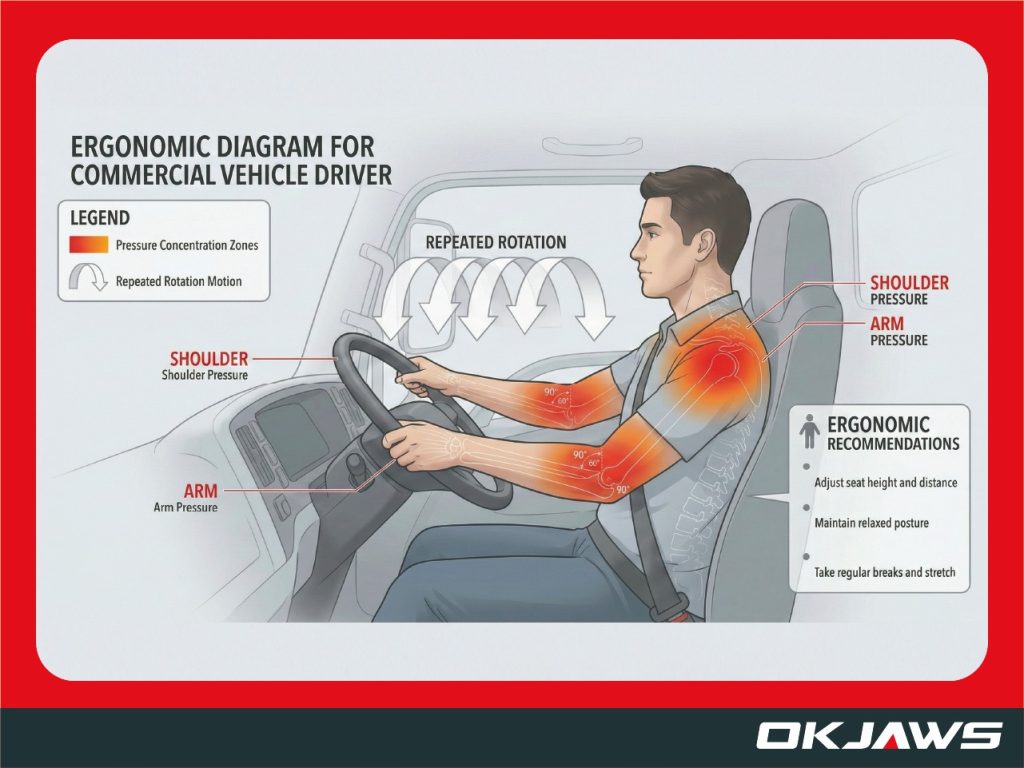
Long-haul operations introduce sustained physical stress that is frequently underestimated. Although highway driving appears steady, drivers constantly perform micro-adjustments to maintain lane stability. Crosswinds, road curvature, lane changes, and uneven surfaces all require ongoing steering corrections. In urban fleet vehicle routes, tight turns and frequent stops further increase steering demands. As a result, wrists, forearms, and shoulders remain continuously engaged throughout the shift. Over time, repetitive steering motion increases cumulative strain on upper-body muscle groups.
3. Fatigue Accumulation and Posture Degradation
As driving hours extend, muscle fatigue gradually accumulates. Early in the shift, strain may seem minimal; however, endurance declines as repetitive movements continue. Drivers may unconsciously lean forward or elevate their shoulders to compensate for steering resistance. Consequently, spinal alignment shifts and neck tension increases. This posture degradation reduces comfort enhancement and may compromise steering precision. When fatigue intensifies, even small reductions in reaction time can influence overall fleet vehicle stability and control.
4. Automotive Industry Specialist Perspective: Steering Torque and Muscle Load
From an Automotive Industry Specialist perspective, steering effort is directly connected to vehicle dynamics. When torque is applied to the steering wheel, resistance from steering column mechanics and front axle geometry must be overcome. Although power assistance systems reduce effort, rotational resistance and stabilization loads remain present. Therefore, shoulder and upper-back muscles must counteract these forces during each correction. Across thousands of steering cycles per shift, cumulative load significantly impacts driver ergonomics and muscular endurance.
Summary
Driver ergonomics is fundamental to maintaining safety, reducing fatigue, and ensuring operational consistency in fleet vehicles. Repetitive steering demands, torque resistance, and prolonged muscle engagement gradually affect posture and reaction precision. When ergonomic alignment is neglected, fatigue increases and driving stability may decline. Conversely, improving ergonomic conditions supports sustained control, enhances comfort enhancement, and strengthens long-haul fleet performance.
The Hidden Cost of Poor Ergonomics in Fleet Operations
Fatigue in fleet vehicle drivers rarely appears suddenly; instead, it accumulates gradually over long shifts. Continuous steering corrections, vibration exposure, and prolonged sitting create ongoing muscular demand. Although each movement may seem minor, repetition over hours significantly increases physical strain. As fatigue builds, drivers experience reduced alertness and slower physical response. Consequently, the overall effectiveness of driver ergonomics directly influences how well a driver maintains consistent performance throughout extended routes.
Poor ergonomic alignment also contributes to musculoskeletal strain and reduced endurance. When steering resistance requires additional shoulder or wrist effort, muscles must compensate repeatedly. Over time, this repetitive load affects the upper back, neck, and forearms. Drivers may experience stiffness, soreness, or reduced range of motion by the end of a shift. As endurance declines, maintaining stable posture becomes more difficult. Therefore, inadequate driver ergonomics gradually limits a driver’s physical capacity to operate efficiently.
Discomfort caused by poor ergonomics can also reduce reaction precision. When muscles are fatigued, fine motor control weakens slightly. Although the change may be subtle, small delays in steering correction can influence vehicle stability, especially at highway speeds. Additionally, ongoing discomfort distracts cognitive focus. Drivers may shift their posture frequently in search of relief, which interrupts smooth steering input. As a result, comfort enhancement is not merely a convenience feature but a factor that directly supports consistent fleet vehicle control.
Beyond individual performance, the business impact of poor driver ergonomics is substantial. Increased fatigue often leads to higher absenteeism and reduced daily productivity. Over time, persistent discomfort can contribute to driver dissatisfaction and turnover. When experienced drivers leave, fleet operations face recruitment and training costs. Moreover, inconsistent driver performance affects delivery schedules and service reliability. Consequently, neglecting ergonomics creates operational inefficiencies that extend beyond the vehicle cabin.
Summary
Poor driver ergonomics generates both operational and financial risks in fleet operations. Fatigue accumulation, musculoskeletal strain, and reduced reaction precision gradually compromise performance. Furthermore, increased absenteeism and turnover amplify costs for fleet managers. Therefore, improving ergonomic conditions is not only a comfort enhancement strategy but also a proactive measure to protect productivity and long-term fleet stability.
Steering Aids vs. Standard Steering — A Direct Comparison
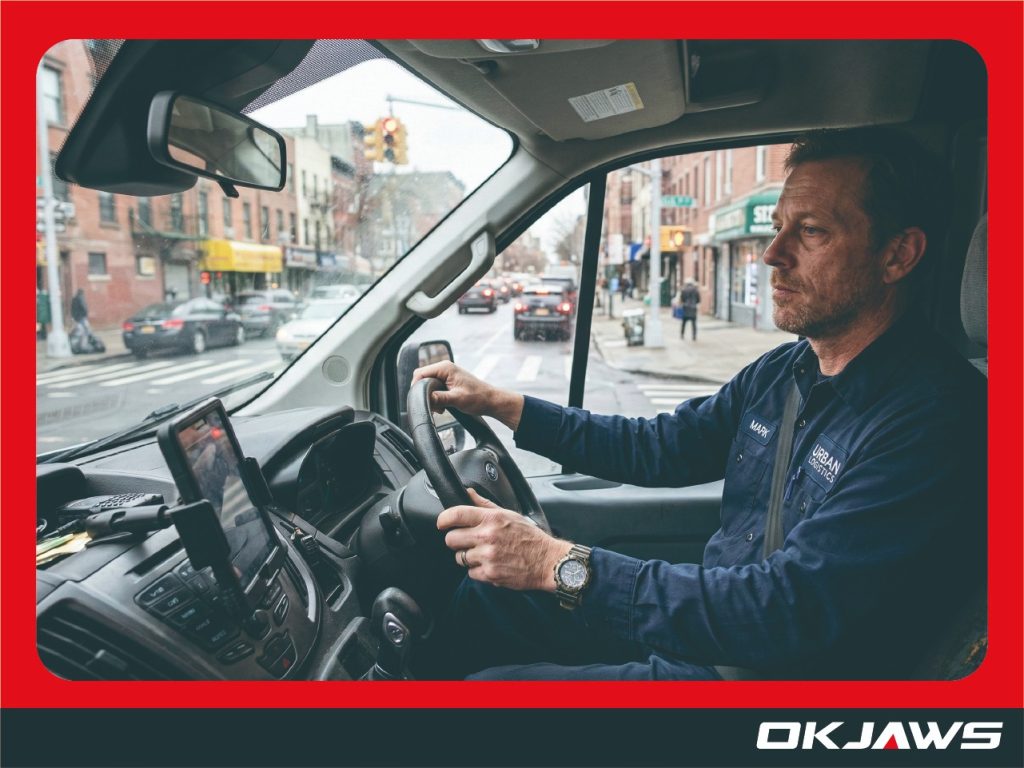
In fleet vehicle operations, steering performance directly affects driver ergonomics, fatigue levels, and long-term comfort enhancement. Traditional steering systems rely entirely on the driver’s grip strength and rotational movement to maneuver the vehicle. Although power steering reduces resistance, repetitive turning still demands continuous muscular engagement. By contrast, steering aids introduce additional leverage and controlled pivot mechanics. Therefore, comparing standard steering with steering aids helps clarify measurable ergonomic differences in real-world fleet applications.
For fleet decision-makers, comparative analysis provides practical insight rather than theoretical claims. While comfort can appear subjective, measurable factors such as steering torque, wrist rotation range, and shoulder load can be evaluated objectively. Consequently, examining side-by-side differences allows fleet managers to assess how ergonomic improvements translate into reduced fatigue and improved route consistency. Instead of relying on perception alone, operators can analyze tangible operational benefits.
The following comparison highlights the functional and ergonomic distinctions between standard steering and steering aid integration in fleet vehicles.
|
Factor |
Standard Steering |
Steering Aid Installed |
Fleet Impact |
|
Steering Torque |
Higher rotational effort |
Reduced torque through leverage |
Less muscle fatigue |
|
Wrist Movement |
Continuous full rotation |
Controlled pivot motion |
Reduced strain |
|
Shoulder Load |
Repetitive wide-angle rotation |
Stabilized turning control |
Lower joint stress |
|
Maneuverability |
Slower tight turns |
Faster single-hand turns |
Improved urban efficiency |
|
Fatigue After 8 Hours |
Moderate to high |
Noticeably reduced |
Better route consistency |
|
Comfort Enhancement |
Limited |
Enhanced posture stability |
Higher driver satisfaction |
The primary ergonomic difference lies in steering torque distribution. With standard steering, drivers must apply consistent rotational force across the full steering arc. However, when a steering aid is installed, leverage reduces the required effort per rotation. As a result, wrist and forearm strain decreases significantly. Because the hand maintains a controlled pivot point, repetitive full-arm rotation becomes less necessary. Over extended driving hours, this mechanical advantage directly supports improved driver ergonomics.
In real-world fleet vehicle operations, these differences translate into measurable performance improvements. Urban delivery routes often require frequent tight turns and parking maneuvers. Steering aids allow faster single-hand adjustments, which enhances maneuverability without excessive shoulder rotation. Consequently, fatigue accumulation slows, and drivers maintain steadier posture during long-haul shifts. Over time, improved comfort enhancement contributes to more consistent driving performance and reduced physical strain across the fleet.
Summary
Steering aids offer clear ergonomic advantages over standard steering systems. By reducing torque demand, limiting wrist rotation, and stabilizing shoulder movement, they directly improve driver ergonomics in fleet vehicles. These mechanical improvements lead to reduced fatigue, enhanced comfort enhancement, and greater operational consistency during long-haul driving.
How Steering Aids Improve Driver Ergonomics and Comfort Enhancement
Steering aids improve driver ergonomics primarily through mechanical leverage. By adding a rotating pivot point to the steering wheel, the device reduces the amount of force required to initiate and control turns. Although modern power steering systems assist movement, rotational resistance still exists during tight maneuvers. However, steering aids distribute torque more efficiently, allowing drivers to apply less muscular effort per rotation. As a result, steering becomes smoother and more controlled, especially during repetitive movements in fleet vehicle operations.
Improved leverage also supports better posture and wrist alignment. When drivers rely solely on standard steering, full-arm rotation is often required for sharp turns. Over time, this repeated wide-angle movement places strain on shoulders and forearms. In contrast, a steering aid allows controlled pivot motion with reduced arm extension. Consequently, wrists remain in a more neutral position, and shoulders stay relaxed. This alignment reduces upper-body tension and supports long-term comfort enhancement during extended driving hours.
Urban fleet vehicle operations particularly benefit from steering aids. Delivery drivers frequently encounter tight intersections, parking maneuvers, loading docks, and narrow streets. These conditions demand constant steering adjustments and quick directional changes. With a steering aid, single-hand maneuverability becomes more efficient and precise. Therefore, drivers can complete complex turns with less physical effort and greater stability. Over a full shift, this efficiency reduces cumulative strain and improves overall route performance.
In long-haul scenarios, where fatigue gradually builds over several hours, ergonomic support becomes even more critical. Steering aids help maintain consistent control without excessive muscular engagement. As fatigue decreases, reaction precision remains steadier and posture deterioration slows. Consequently, comfort enhancement is sustained throughout extended routes. For fleet operators, this means drivers are better equipped to maintain focus and consistent steering performance across long-distance assignments.
Summary
Steering aids directly improve driver ergonomics by reducing steering force, stabilizing wrist alignment, and minimizing shoulder strain. Through mechanical leverage and controlled pivot motion, they lower fatigue accumulation in fleet vehicle operations. Ultimately, this ergonomic improvement enhances control, supports long-haul comfort enhancement, and promotes more consistent driving performance across commercial fleets.
Engineering Perspective — Why Steering Design Determines Ergonomic Performance
From a mechanical standpoint, steering column design directly influences driver ergonomics in a fleet vehicle environment. When a driver rotates the steering wheel, torque is transferred through the steering column to the steering rack and ultimately to the wheels. Although hydraulic or electric power assistance reduces overall effort, torque transfer efficiency still determines how much resistance the driver perceives. If internal friction or imbalance exists, muscular compensation increases. Therefore, optimized torque flow ensures smoother steering input and reduces upper-body strain during repetitive maneuvers.
Bearing performance is equally critical to rotational efficiency. High-precision bearings minimize internal friction and enable consistent circular motion under load. When steering rotation remains smooth and predictable, drivers require fewer corrective adjustments. Consequently, muscular engagement becomes more controlled and less forceful. In contrast, lower-grade bearing systems may create uneven resistance or micro-vibrations. Over extended driving hours, these small inconsistencies amplify fatigue. Thus, bearing smoothness directly contributes to comfort enhancement and long-term ergonomic stability in commercial fleet operations.
Material selection further determines durability and vibration control. Zinc alloy components provide superior structural strength compared to lightweight plastic alternatives. Stronger materials resist deformation under continuous torque cycles and maintain alignment over time. Additionally, stable materials reduce vibration transmission from the steering system to the driver’s hands and wrists. Because vibration increases muscle fatigue and grip tension, durable construction plays a key role in preserving driver ergonomics across high-mileage fleet vehicles.
With more than four decades of specialization, Okjaws applies precision engineering principles to steering solutions. By integrating zinc alloy bases, refined bearing mechanisms, and secure fastening structures, the company prioritizes stability, durability, and ergonomic reliability for demanding commercial applications.
Summary
Engineering quality directly shapes ergonomic performance. Efficient torque transfer, smooth bearing rotation, and durable materials reduce muscular strain and vibration exposure. When steering systems are precisely designed, fleet vehicle drivers experience improved comfort enhancement, sustained control, and lower fatigue accumulation during long-haul operations.
Fleet ROI — Why Comfort Enhancement Is a Strategic Investment
Comfort enhancement in a fleet vehicle environment is closely linked to productivity. When drivers experience reduced physical strain, they maintain steadier posture and more consistent steering control throughout long shifts. Although ergonomic improvements may appear subtle, they directly influence endurance and concentration. As a result, drivers can complete routes with fewer performance fluctuations. Improved driver ergonomics therefore supports smoother operations, fewer errors, and greater daily output across long-haul assignments.
Reduced fatigue also lowers downtime related to physical discomfort. When muscular strain accumulates, drivers may require additional rest periods or experience minor performance slowdowns. However, when steering effort is optimized and posture remains stable, fatigue builds more gradually. Consequently, route interruptions decrease and schedule reliability improves. Over time, improved comfort enhancement reduces strain-related inefficiencies and supports more predictable fleet vehicle utilization.
Driver retention is another significant business factor. Persistent discomfort contributes to dissatisfaction and turnover in commercial driving roles. In contrast, ergonomic improvements demonstrate organizational commitment to driver well-being. When drivers feel physically supported, morale improves and long-term engagement strengthens. Therefore, investing in driver ergonomics can positively influence workforce stability and reduce recruitment and training expenses.
Compared to major mechanical upgrades, ergonomic enhancements such as steering aids represent relatively low-cost interventions. Yet, their operational impact can be substantial. By improving comfort and reducing fatigue accumulation, fleet operators gain measurable efficiency improvements without extensive capital investment.
Summary
Optimizing driver ergonomics through comfort enhancement generates measurable ROI. Increased productivity, reduced downtime, improved retention, and stable performance collectively strengthen fleet vehicle profitability and long-term operational sustainability.
Why Okjaws Steering Solutions Support Long-Haul Fleet Vehicles
With more than 40 years of continuous manufacturing experience, Okjaws has specialized in steering solutions designed for durability and control in demanding driving environments. Since 1976, the company has focused on refining steering wheel knob technology to improve handling precision and long-term reliability. Rather than treating steering accessories as simple add-ons, Okjaws approaches them as performance-enhancing components that directly support driver ergonomics in commercial fleet vehicle operations.
A key differentiator lies in material and structural design. Okjaws steering solutions utilize zinc alloy construction, which provides superior strength compared to lightweight plastic alternatives. This robust base enhances stability under repeated torque cycles and reduces deformation over time. In addition, precision-engineered bearing systems promote smooth rotational movement and consistent steering response. By minimizing internal friction and vibration transfer, these components contribute directly to comfort enhancement and reduced upper-body strain during long-haul driving.
These engineering features align closely with the ergonomic demands of fleet vehicle operations. Long-distance drivers require equipment that maintains consistent performance across high mileage and repetitive maneuvers. By combining durability, controlled leverage, and smooth rotation, Okjaws steering solutions support sustained driver ergonomics. As a result, fleet operators gain reliable steering performance that helps reduce fatigue accumulation and maintain operational consistency.
Summary
Okjaws’ long-standing expertise, zinc alloy durability, and precision bearing design support reliable ergonomic performance. By prioritizing strength, smooth rotation, and long-term stability, the brand reinforces driver ergonomics and comfort enhancement in demanding fleet vehicle environments.
Frequently Asked Questions
Do steering wheel knobs improve driver ergonomics?
Yes, steering wheel knobs can improve driver ergonomics by reducing the amount of rotational force required during turns. By providing additional leverage and a controlled pivot point, they minimize wrist and shoulder strain. As a result, drivers maintain better posture and experience improved comfort enhancement during long-haul or repetitive fleet vehicle operations.
Are steering aids safe for fleet vehicles?
Steering aids are generally safe for fleet vehicles when properly installed and designed for commercial use. High-quality models with secure mounting systems and durable materials ensure stable operation. However, fleet managers should verify compatibility with vehicle specifications and ensure professional installation to maintain consistent steering performance and control.
Can steering knobs reduce driver fatigue?
Yes, steering knobs can help reduce driver fatigue by lowering the physical effort required during frequent turning. Because they decrease repetitive shoulder and wrist motion, muscular strain accumulates more slowly over extended shifts. Consequently, drivers experience improved comfort enhancement and maintain steadier control throughout long-haul routes.
Are steering accessories legal in commercial vehicles?
The legality of steering accessories varies by country and region. In most cases, steering knobs are permitted if they do not interfere with vehicle control or safety systems. Fleet operators should check local transportation regulations before installation to ensure compliance with applicable commercial vehicle requirements.
What materials are best for long-term steering durability?
For long-term durability, zinc alloy and reinforced metal constructions are preferred over standard plastic components. Stronger materials resist deformation under repeated torque and reduce vibration transfer. Therefore, high-quality metal bases combined with precision bearings provide better stability, longer service life, and improved driver ergonomics in fleet vehicle applications.
Conclusion
In modern commercial transportation, driver ergonomics is no longer a secondary consideration but a fundamental component of fleet vehicle performance. Extended driving hours, repetitive steering motion, and continuous torque resistance place measurable strain on drivers over time. Therefore, optimizing the steering interface directly supports safety, fatigue management, and operational consistency. When ergonomic principles are integrated into daily fleet operations, drivers maintain better posture, steadier control, and improved reaction precision across demanding long-haul routes.
Looking ahead, sustained comfort enhancement will remain a strategic advantage for fleet operators. By investing in ergonomic steering solutions, companies reduce fatigue-related inefficiencies and promote long-term workforce stability. Improved physical support leads to more consistent route execution, stronger driver satisfaction, and enhanced operational reliability. Ultimately, prioritizing driver ergonomics strengthens both human performance and business outcomes in competitive fleet vehicle environments.